Alan Bennett-Law
ENHANCED DBS CHECKED
Horizons –
Online Counselling, Psychotherapy and EMDR Europe Accredited Practitioner
Aligned to column C of the SCoPEd framework.



Working With ADHD
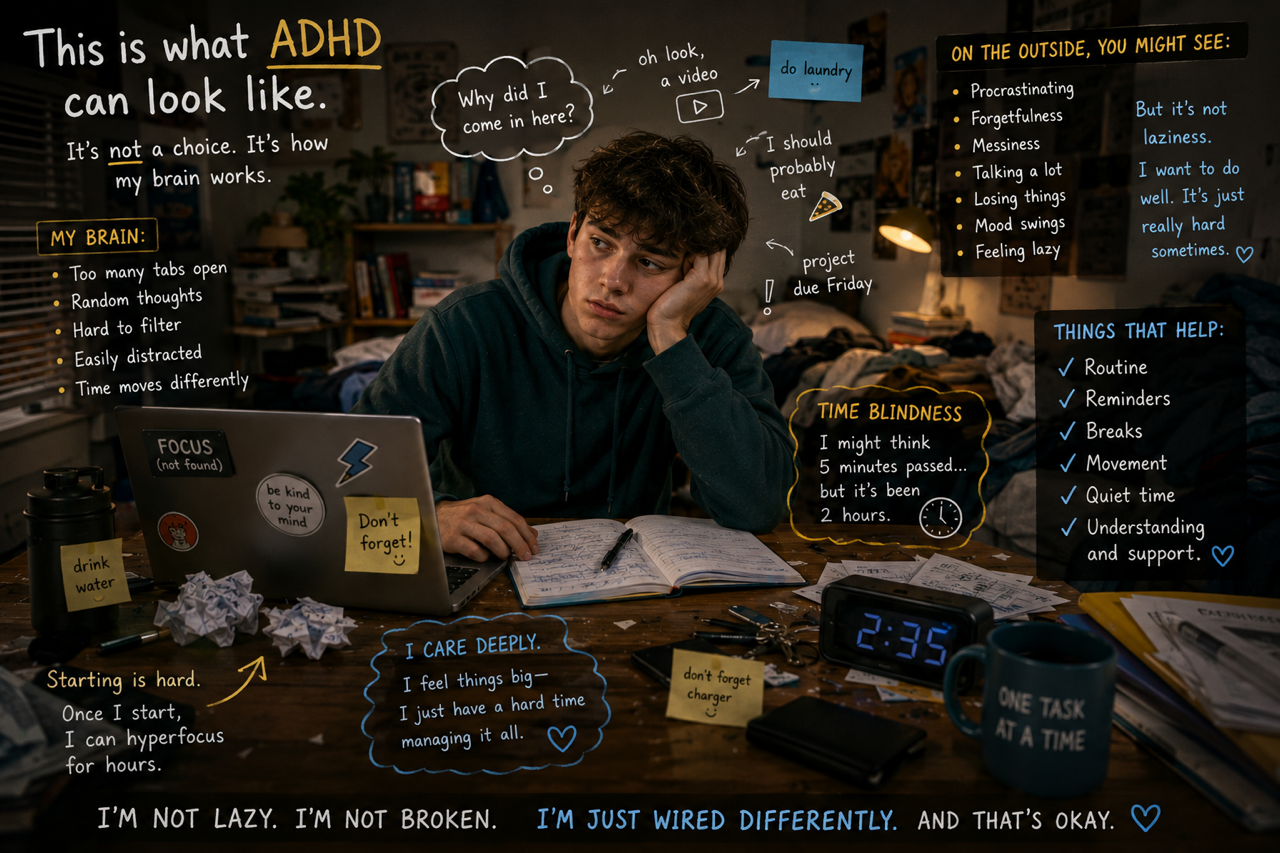
The labels "lazy," "boastful," or "too much"—are common misinterpretations of the way an ADHD brain naturally functions.
What others see as character flaws are often the visible results of executive dysfunction and impulse control differences. [see 1, 2, 3, 4 below]
Here is why people may be misreading your symptoms the (numbers refer to the links below):
1. "Lazy" is actually Executive Dysfunction [5]
• The "Go" Button is Broken: In an ADHD brain, the "management system" that helps start, organize, and finish tasks is often less active. This can feel like a mental block where you want to act but your body doesn't respond.
• Dopamine Deficiency: Because the ADHD brain has lower baseline dopamine, it struggles to stay motivated for tasks that aren't immediately stimulating or rewarding.
• Frozen vs. Lazy: Laziness is a choice to not work; ADHD paralysis is an agonizing state of wanting to do something but feeling mentally stuck or overwhelmed by the complexity of the task. [1, 6, 7, 8, 9]
2. "Boastful" is often Connection Seeking [10]
• Connecting Through Stories: People with ADHD often share personal stories as a way to relate to others—their brains "light up" when they find a shared experience. This is meant to anchor attention and keep their brain engaged, not to dominate or brag.
• Enthusiasm Misread: Intense passion and being "full of ideas" can be perceived as an ego-driven need to be the centre of attention, when it's actually just a high-energy way of expressing interest.
• Oversharing: Impulsivity can lead to sharing personal details upfront to seek acceptance or confirm fears of rejection (part of Rejection Sensitive Dysphoria). [3, 10, 11]
3. "Speaks Too Much" is a Core Symptom [10, 12]
• Impulse Control: Excessive talking is a formal symptom of ADHD. It's often less about being social and more about a difficulty controlling verbal impulses.
• Fear of Forgetting: Many people with ADHD interrupt or speak quickly because they fear they will lose their train of thought if they wait for a pause.
• Hyperverbal Behaviour: When you are excited, dopamine surges, which can make it physically difficult to stop talking or regulate the volume and speed of your voice. [2, 10, 13, 14]
How to Respond to These Labels
• Use "Communisplation": Offer insight into how your brain works rather than an excuse. For example, "I'm not being lazy; I'm experiencing some executive dysfunction right now and am feeling a bit stuck".
• Check-In Mid-Story: If you feel you're talking a lot, try pausing to ask, "What about you?" This helps balance the conversation and keeps the connection strong.
• Find Your "Tribe": Seek out people who appreciate your energy and innovative thinking rather than trying to fit into a mould that makes you feel "too much". [3, 10, 15]
Links