Alan Bennett-Law
ENHANCED DBS CHECKED
Horizons –
Online Counselling, Psychotherapy and EMDR Europe Accredited Practitioner
Aligned to column C of the SCoPEd framework.



Online Counselling, Psychotherapy and EMDR.
Based in Brighton


Welcome to Horizons
Therapy can be life-changing
I offer a confidential, non-judgemental and compassionate space where you can talk freely about any difficulties you may be facing. You might be feeling anxious, low, overwhelmed - and need support. I provide a consistent and supportive environment to help you to reflect, make decisions, and explore the changes you feel will help you move forward in life.
I work collaboratively with my clients to build a trusting relationship, where you can safely explore what’s troubling you—at your own pace.
Based in Brighton, I offer Online Counselling and Psychotherapy, specialising in EMDR Therapy (including Attachment Informed EMDR). I am an EMDR Europe Accredited Practitioner. I am a Senior Accredited member of both the BACP and NCPS, and my work aligns with Column C of the SCoPEd framework, reflecting advanced competencies and practice standards.
You are not alone in what you’re going through. I offer a safe, caring, and confidential space where you can talk, reflect, and grow. As an attentive and empathic listener, I’m here to support you through whatever challenges you're facing.
No commitment. We can discuss what you're looking for, answer any questions and consider whether online therapy with me would be appropriate.
Counselling and Psychotherapy
Counselling and Psychotherapy are professional forms of talking therapy that help people explore and manage a wide range of emotional, psychological, and relational issues. While the terms are often used interchangeably, there can be subtle differences:
1. Counselling:
Focus: Often short to medium-term.
Purpose: Helps with specific issues like stress, grief, relationship problems, or decision-making.
Approach: Practical and problem-focused; more immediate coping strategies.
2. Psychotherapy:
Focus: Often longer-term and deeper.
Purpose: Explores long-standing patterns, emotional difficulties, trauma, or psychological disorders.
Approach: Focuses on deeper-rooted issues and how past experiences affect current behaviour.

What to Expect in a Therapy Session
I offer a free initial consultation of up to 20 minutes, for you to talk about your needs and see if I am a good fit as your therapist.
I may ask you to fill out intake forms about your background and mental health history.
During the Session
Sessions typically last for 50 minutes, and might look like this:
1. Confidentiality Explained
I will outline confidentiality and its limits (e.g., if there’s risk of harm to yourself or others). For more information about confidentiality please scroll to the bottom of this page.
2. Setting Goals
In early sessions, you'll discuss why you're seeking help and what you'd like to achieve.
3. Talking & Exploration
I’ll invite you to talk about what’s going on in your life; your thoughts, feelings, and experiences. I will listen non-judgmentally, ask questions, and may offer insights or challenges.
4. Emotional Processing
It’s normal to feel emotional, relieved, confused, or even uncomfortable — therapy often surfaces deep or difficult feelings.
Ending the Session:
Sessions usually end with a brief summary, and sometimes suggestions or reflections.
Future sessions may build on what was discussed.
How You Might Feel Afterwards:
- Relieved or lighter, especially after expressing difficult emotions.
- Tired or raw, particularly after intense sessions.
- Motivated, more aware, or uncertain — these are all valid responses
Benefits of Counselling and Psychotherapy:
- Better emotional regulation.
- Healthier relationships.
- Increased self-awareness.
- Coping strategies for stress, anxiety, or depression.
- Healing from trauma or loss
Therapy is not about someone telling you what to do — it’s a collaborative space where you’re supported in exploring yourself, your challenges and your growth. The most important factor is a trusting relationship with me, as your therapist.
Therapeutic Modalities
Qualifications & Training
Specialist Areas
I have a special interest in working with:
Neurodiversity: ADD/ADHD, Autism Spectrum
Mental Health: Anxiety, Depression, OCD, Phobias, Post-Traumatic Stress
Emotional Wellbeing: Anger Management, Bereavement, Self-Esteem, Stress, Trauma
Health & Lifestyle: Addictions, AIDS/HIV, Health-Related Issues, Eating Disorders
Relationships & Identity: LGBTQ+ Counselling, Sexual Identity, Cultural Issues
Life Transitions: Loss, Men’s Issues, Service Veterans
EMDR
EMDR (Eye Movement Desensitisation and Reprocessing) is a structured, evidence-based psychotherapy approach primarily used to help people heal from trauma and distressing life experiences. It was developed by Francine Shapiro in the late 1980s.
What is EMDR?
At its core, EMDR involves:
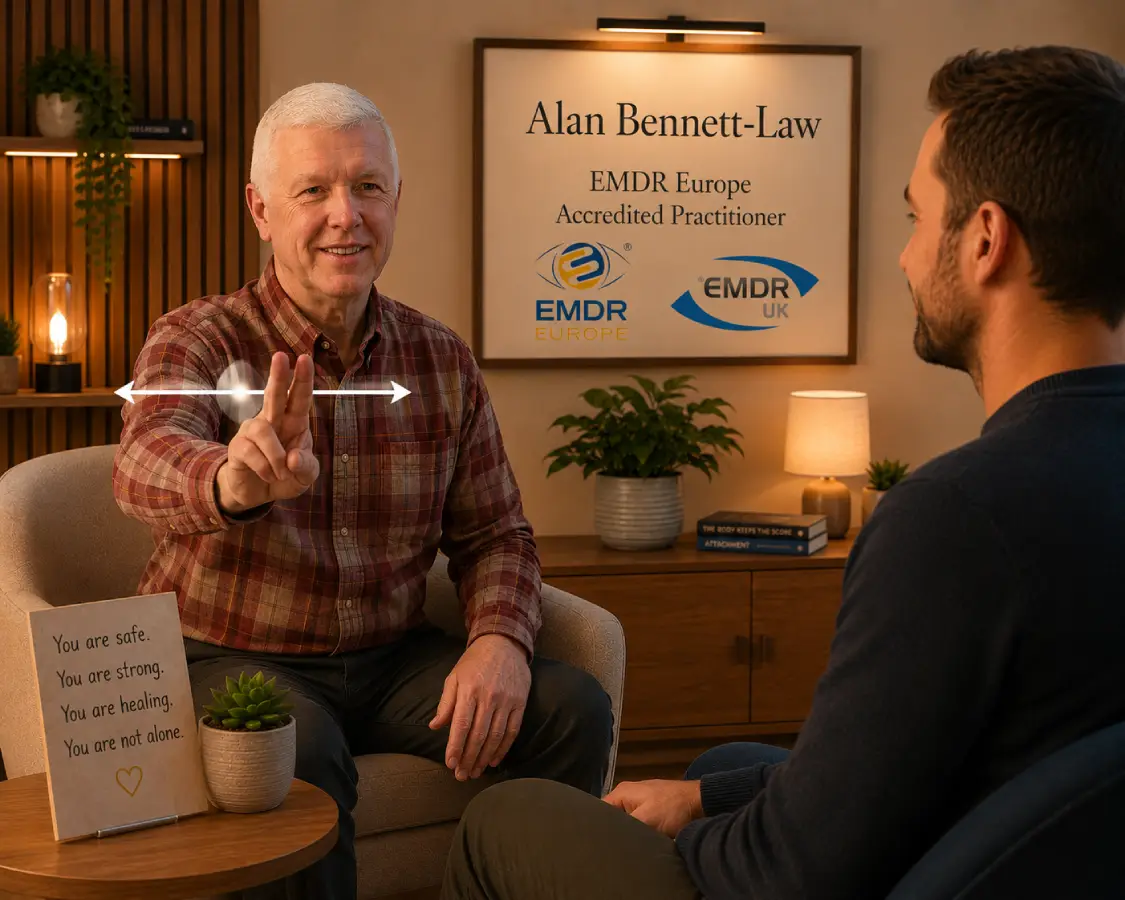
Recalling traumatic or distressing memories, while the therapist directs your eye movements (or sometimes uses tapping or audio tones).This bilateral stimulation (left-right-left) is believed to help your brain reprocess those memories, making them less emotionally charged.
How Does It Work?
The theory is that traumatic memories get "stuck" in the brain in an unprocessed form. When triggered, these memories can cause intense emotional or physical responses as if the trauma is happening now.
EMDR helps to:
- Unstick and reprocess these memories
- Allow the brain to store them in a more adaptive way
- Reduce the emotional intensity and distress
This happens through eight structured phases, including history-taking, preparation, assessment, desensitisation, installation of positive beliefs, and re-evaluation.
Conditions EMDR Can Help With:
EMDR is best known for treating Post-Traumatic Stress Disorder (PTSD), but it's also been shown to help with:
- Anxiety
- Depression
- Phobias
- Grief
- Panic disorders
- Chronic pain
- Disturbing life events (e.g., bullying, medical trauma)
Is It Effective?
Yes. EMDR is recognized as an effective treatment by organisations such as:
- World Health Organization (WHO)
- American Psychological Association (APA)
- U.S. Department of Veterans Affairs
- The UN Refugee Agency.
NICE recommends that EMDR therapy for adults should be delivered by trained practitioners with ongoing supervision, typically over 8-12 sessions (or more if clinically indicated). For many people, EMDR can bring relief faster than traditional talk therapy, especially for trauma-related symptoms.
A Simple Analogy
Think of your brain like a file cabinet. Traumatic memories are like files thrown in unorganized, with alarms attached. EMDR helps you reorganise the files and turn off the alarms — the memory remains, but it no longer overwhelms you.
EMDR therapy online
A study published in the Journal of EMDR Practice and Research found that online EMDR therapy was just as effective as traditional face-to-face therapy in reducing symptoms of post-traumatic stress disorder (PTSD). Another study published in the Journal of Consulting and Clinical Psychology found that online EMDR therapy was effective in reducing symptoms of anxiety and depression.
No commitment. We can discuss what you're looking for, answer any questions and consider whether online therapy with me would be appropriate.
NICE Guidance & EMDR for Fibromyalgia
The UK National Institute for Health and Care Excellence recommends a holistic, multidisciplinary approach to fibromyalgia, including exercise, self-management strategies, and psychological support where appropriate.
EMDR is not specifically included in NICE guidance for fibromyalgia, as research is still emerging. However, it may be used as part of a wider care plan to help people who experience trauma, stress, or emotional distress linked to chronic pain, supporting overall wellbeing and quality of life.
EMDR Therapy and Fibromyalgia
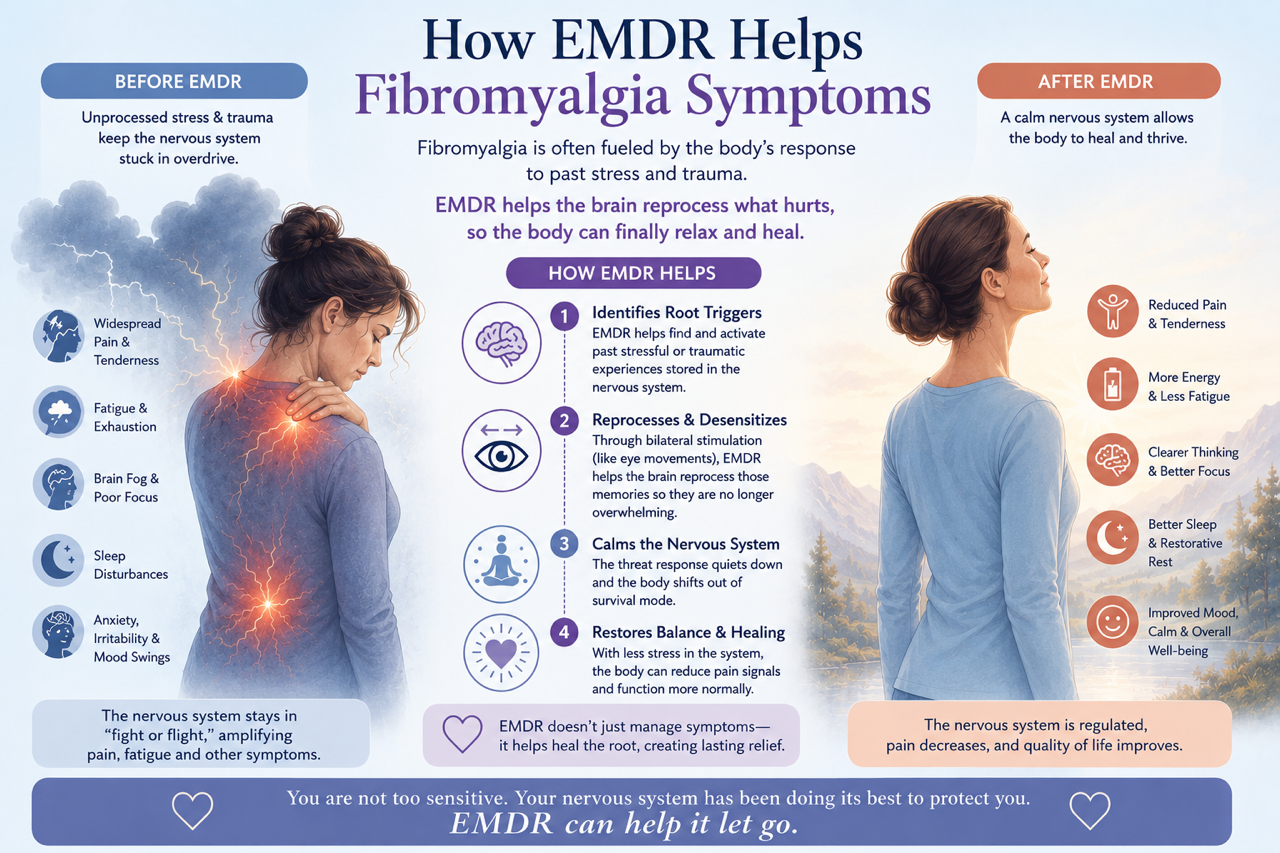
Living with fibromyalgia can be physically and emotionally challenging. Symptoms such as widespread pain, fatigue, sleep difficulties, and brain fog can affect every area of life. Many people also notice that stress, past experiences, or emotional strain can make symptoms worse.
EMDR therapy may offer a supportive way of helping the nervous system process some of the underlying stress and distress that can contribute to how pain is experienced.
A whole-person approach to fibromyalgia
In line with guidance from the National Institute for Health and Care Excellence, fibromyalgia should be supported using a holistic approach. This means care should consider:
• Physical symptoms such as pain and fatigue
• Emotional wellbeing, including stress and anxiety
• Self-management strategies and lifestyle support
• Psychological therapies where appropriate
EMDR can form part of this psychological support, alongside medical care and other therapies.
How EMDR may help with fibromyalgia
Fibromyalgia is now understood as a condition involving how the nervous system processes pain. For some people, symptoms may be influenced by:
• Long-term stress
• Past difficult or overwhelming experiences
• The nervous system remaining in a heightened state of alert
EMDR may help by supporting the brain and body to process these experiences more adaptively.
People often report improvements in:
• Pain-related distress
• Emotional overwhelm linked to symptoms
• Sleep quality
• Anxiety and low mood
• Overall coping and quality of life
What happens in EMDR sessions?
EMDR is always tailored to your individual needs and pace.
1. Understanding your experience
We begin by exploring your symptoms, history, and what affects your fibromyalgia.
2. Building safety and coping strategies
Before any deeper work, we focus on helping you feel grounded and supported. This may include techniques to manage pain flare-ups and regulate your nervous system.
3. Processing relevant experiences
This may include:
• Past stressful or overwhelming experiences
• Times when symptoms first began or worsened
• Current triggers that increase pain or distress
You are always in control of what is explored and when.
4. Working gently with body sensations
At times, we may also focus on physical sensations linked to pain. This is done carefully and at a pace that feels safe, supporting the nervous system to reduce distress.
A compassionate and paced approach
Working with fibromyalgia requires sensitivity and care. Sessions are designed to:
• Move at a pace that feels manageable
• Avoid overwhelm or symptom flare-ups
• Respect your lived experience of pain
• Support your sense of control and choice
You are always at the centre of the process.
EMDR and the evidence
Research into EMDR for chronic pain and fibromyalgia is still developing, but early studies are promising. Findings suggest EMDR may help reduce:
• Pain intensity
• Emotional distress linked to symptoms
• Anxiety and depression
• Sleep difficulties
While EMDR is not a cure for fibromyalgia, it may be a helpful part of a broader support plan focused on improving quality of life.
Working alongside medical care
EMDR should be viewed as part of a wider approach to care. It works best alongside:
• GP or specialist medical support
• Pain management strategies
• Physiotherapy or gentle movement approaches
• Self-care and pacing techniques
Getting started
If you are living with fibromyalgia and would like to explore whether EMDR could support you, you are welcome to get in touch. We can talk through your needs and decide together whether this approach feels right for you.
No commitment. We can discuss what you're looking for, answer any questions and consider whether online therapy with me would be appropriate.
Attachment-Informed EMDR
I trained in the Attachment-Informed EMDR approach with Mark Brayne at EMDR Focus. I am included in the EMDR Focus Therapist Directory.
Attachment-Informed EMDR (AI-EMDR) is a clinical approach that integrates Attachment Theory into the standard EMDR therapy model. It's designed to address not just trauma, but also deep-seated relational and developmental wounds rooted in early attachment experiences..
What Does "Attachment-Informed" Mean?
Attachment-Informed EMDR expands the traditional EMDR framework by recognising that early relationships with caregivers (secure or insecure attachment) strongly influence:
- Self-worth
- Emotional regulation
- Relationship patterns
- Core beliefs like "I am unlovable," "I'm not safe," or "I need to please others to be accepted"
These attachment-based wounds are often implicit (non-verbal or pre-verbal) and chronic, rather than stemming from single-incident trauma.
Key Features of Attachment-Informed EMDR:
1. Focus on Developmental Trauma:
- Targets relational trauma from early childhood (neglect, inconsistent caregiving, enmeshment, abandonment).
- Emphasises how unmet attachment needs shape a person's internal world.
2. Modified Targeting:
- Instead of only targeting "big T" trauma (e.g., assault, accidents), it addresses "little t" trauma, such as feeling unloved, unseen, or chronically shamed.
3. Therapeutic Relationship is Central:
- Greater attention is paid to attunement, emotional safety, and trust in the therapeutic relationship.
- The therapist may act as a kind of "earned secure base", offering corrective relational experiences.
4. Affective Resourcing:
- Clients often need more preparation and stabilisation before processing.
- Techniques like imagery, inner child work, and ego state interventions (e.g. parts work) are commonly used.
5. Pacing and Processing Adjustments:
- Processing is often slower and gentler than traditional EMDR.
- Clients may not be ready for full reprocessing until enough internal stability is built.
Who Is It For?
AI-EMDR is especially useful for clients with:
- Complex PTSD (C-PTSD)
- Developmental trauma
- Disorganised or avoidant attachment styles
- Chronic shame, low self-esteem, or relational difficulties
- History of neglect or emotional abuse
Accreditation
I am an EMDR Europe accredited practitioner, which signifies that I have demonstrated a high level of expertise and experience in EMDR therapy. This accreditation is granted by EMDR Europe, a professional organisation that sets rigorous standards for training, practice and ongoing professional development.
To achieve accreditation, practitioners typically complete specialised training that meets EMDR Europe’s criteria, accumulate supervised clinical experience with EMDR, and adhere to ethical and professional standards. This designation assures clients that the practitioner is competent and committed to delivering quality EMDR therapy in accordance with established European guidelines.
Confidentiality Statement for Counselling Sessions
Counselling sessions are private and confidential. This means that the information that you share will not be disclosed to anyone outside of the counselling service without your knowledge and consent.
However, there are some important exceptions to confidentiality.
- Risk of Harm - If you disclose information that indicates you are at serious risk of harming yourself or others, I may be required to break confidentiality to ensure safety.
- Legal requirements - In rare circumstances, I may be legally obliged to share information (for example, in relation to child protection, safeguarding vulnerable adults, or a court order).
- Supervision - To maintain good practice, I may discuss cases in professional supervision. Identifying details are kept anonymous and confidentiality is preserved.
Whenever possible, I will discuss with you any need to share information and seek your consent before doing so.
Your trust is essential to the counselling relationship and every effort is made to protect your privacy.
Get in touch
Feel free to contact me if you have any questions about how counselling works, or to arrange an initial appointment. I am happy to discuss any queries or questions you may have prior to arranging an initial appointment.
All enquires are usually answered within 24 hours, and all contact is strictly confidential and uses secure phone and email services.
£90 for a 50-minute session
48 hours' notice required (not including weekends)